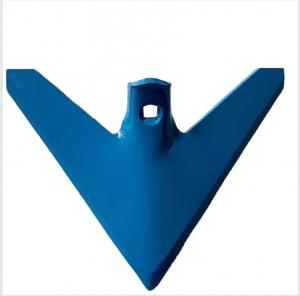
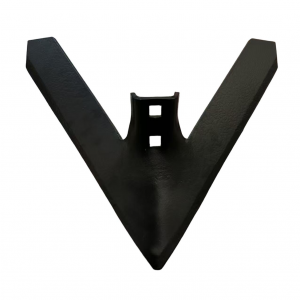
Agricultural Furrow Plow Tip Carbide Hardfaced Chisel Plow Point Spare Parts for Heavy Duty Farming
This product is a core wear part of agricultural tillage machinery—the plowshare tip—suitable for various moldboard plows, reversible plows, and subsoil plows. As the component that first contacts the soil and bears the greatest friction and impact, its quality directly determines tillage resistance, fuel efficiency, and working depth stability. This plowshare tip adopts a composite structure of "high-strength matrix + gradient hard alloy," achieving a balance between sharp soil penetration, wear resistance and drag reduction, and impact toughness. This significantly extends the replacement cycle and reduces the average operating cost per acre.
Matrix: Made of 30MnB or 40Cr high-strength alloy structural steel, integrally hot forged, with high density and no internal porosity. After forging, it undergoes quenching and tempering treatment to obtain tempered martensitic structure. The matrix impact toughness is ≥50J/cm², which can effectively absorb transient impacts from stones and tree roots, eliminating the risk of chipping or breakage.
Wear-resistant layer: Plasma welding or laser cladding is used on the soil-facing surface of the plow tip (the wear area of the front cutting edge and upper surface) to clad high-chromium cast iron or tungsten carbide-reinforced iron-based alloy. The weld overlay can reach a hardness of HRC 58-62, with a thickness of 2.5-4.0 mm, forming a metallurgical bond with the substrate and eliminating the risk of peeling. Under high-speed abrasive wear conditions in soil, the hard particles form a self-protective "micro-support" morphology, reducing the wear rate to only 1/3 that of ordinary 65Mn steel plates.
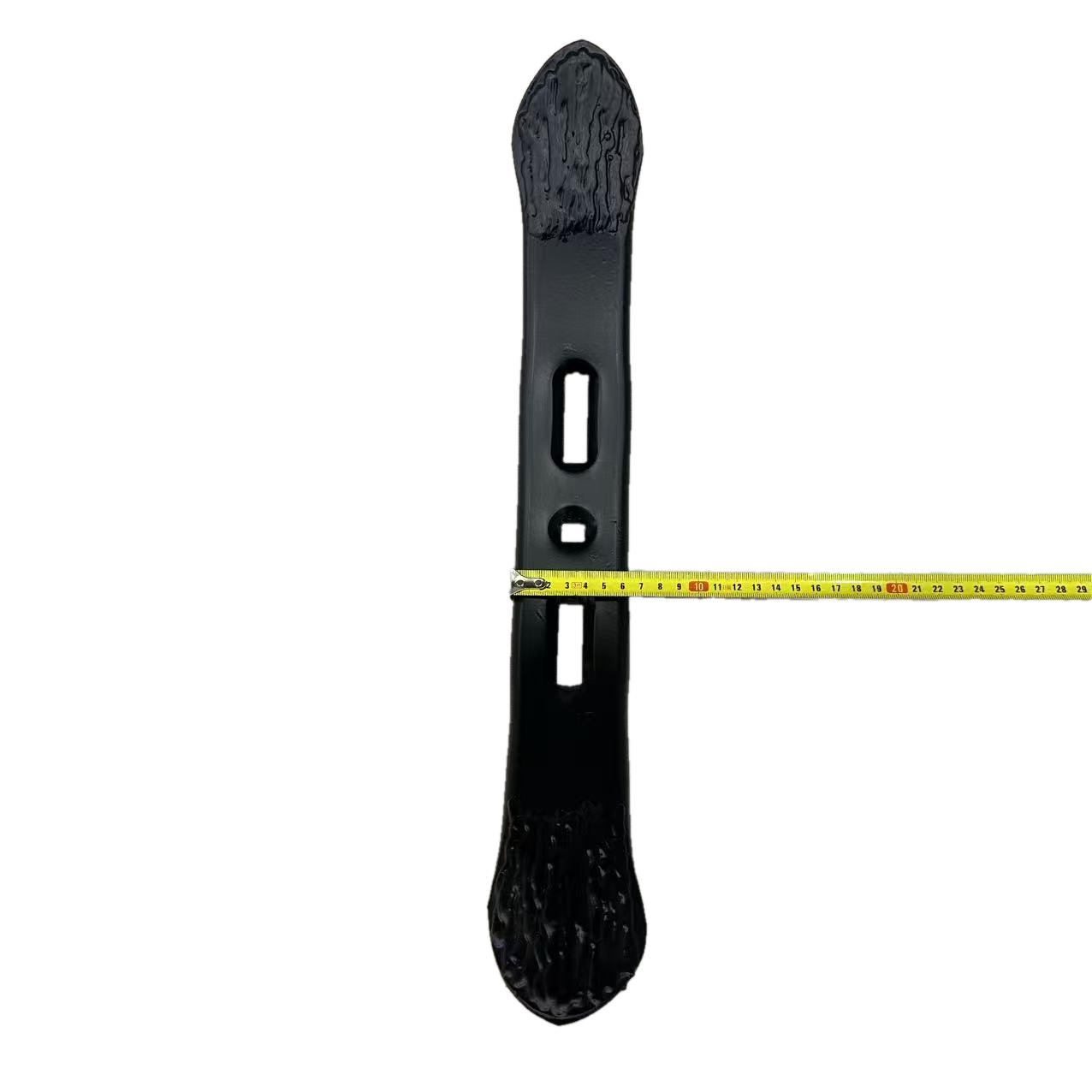
Geometric Design: The plow tip's curved surface is optimized based on the streamlined movement trajectory of the soil clod, reducing the friction angle with the soil. The front section features a gradually narrowing, thin-bladed design, minimizing soil breaking pressure; the middle and rear sections gradually thicken to ensure overall rigidity. The entry angle has been field-calibrated for different soil types (sand, clay, loam), combining good entry ability with low traction resistance.
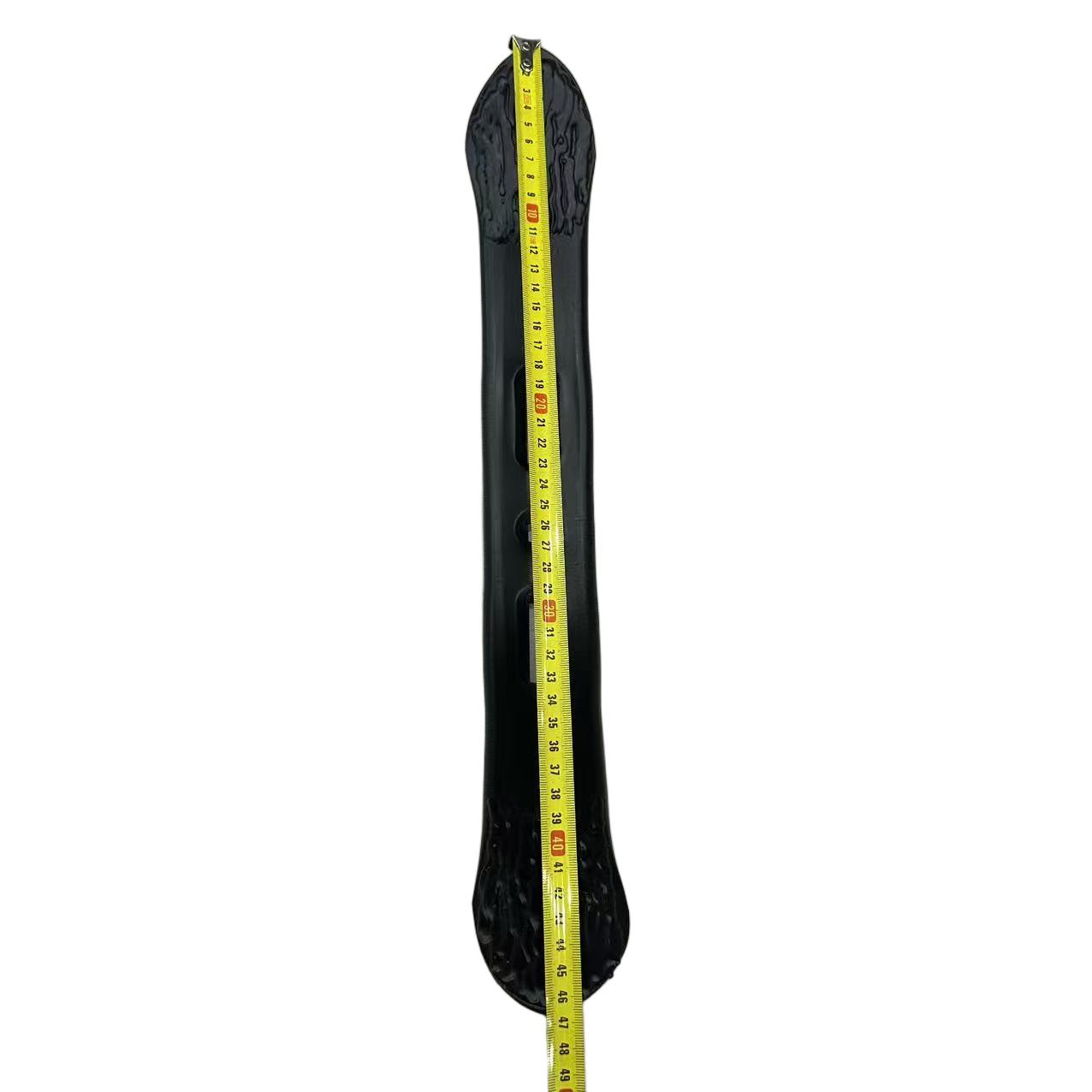
Extreme Wear Resistance: Laboratory dry sand rubber wheel wear tests show that the unit wear amount is ≤0.25g/kg·m. Under medium sandy loam conditions, a single plow tip can complete 500-800 acres of work, with a lifespan 2.5-3 times that of ordinary 65Mn steel plow tips.
Self-Sharpening Characteristics: The hardened weld overlay and the relatively soft substrate form synergistic wear—the substrate wears slightly faster, causing the cemented carbide particles to continuously protrude slightly from the working surface, always maintaining a sharp cutting edge shape and preventing increased fuel consumption due to dulling.
Impact resistance and safety: When encountering hidden boulders or hard obstacles, the overall matrix will not undergo brittle fracture, and only local deformation may occur; the plasticity margin is sufficient to avoid debris falling into the field and damaging subsequent equipment.