


Heavy Duty Disc Harrow Blade 22/24/26 Inch, Agricultural Tiller Parts, Heat Treatment Notched Disc Blade
Disc harrow blades, as a core and easily worn component in land preparation operations, directly affect soil fragmentation, surface smoothness, and the germination rate of crops the following year. This product is specifically designed for modern farming environments and is suitable for large disc harrows, combined tillage machines, and power-driven harrows, making it a key accessory for improving agricultural operational efficiency.
The rake blades are made of high-end alloy steel, specifically 65Mn (65 manganese steel) and 30MnB (30 manganese boron steel), and are formed through CNC rolling and quenching processes after high-temperature overall heat treatment. Its advantages are:
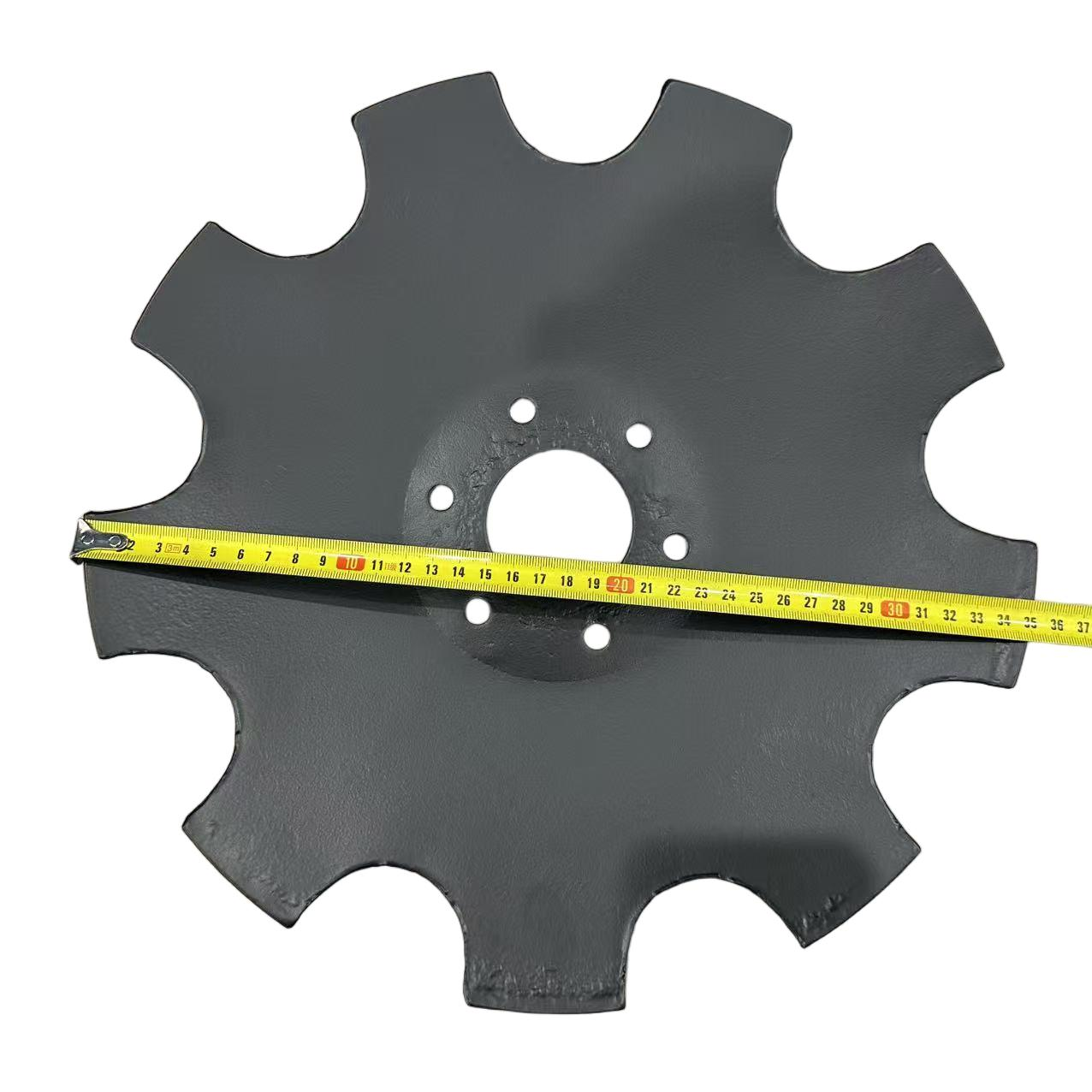
Uniform Hardness: The surface hardness of the cutting edge can reach HRC 42-48, while the core retains toughness and is not easily broken.
High Wear Resistance: The addition of trace elements such as boron significantly extends the service life in gravel and compacted soil, increasing it by more than 30% compared to ordinary rake blades.
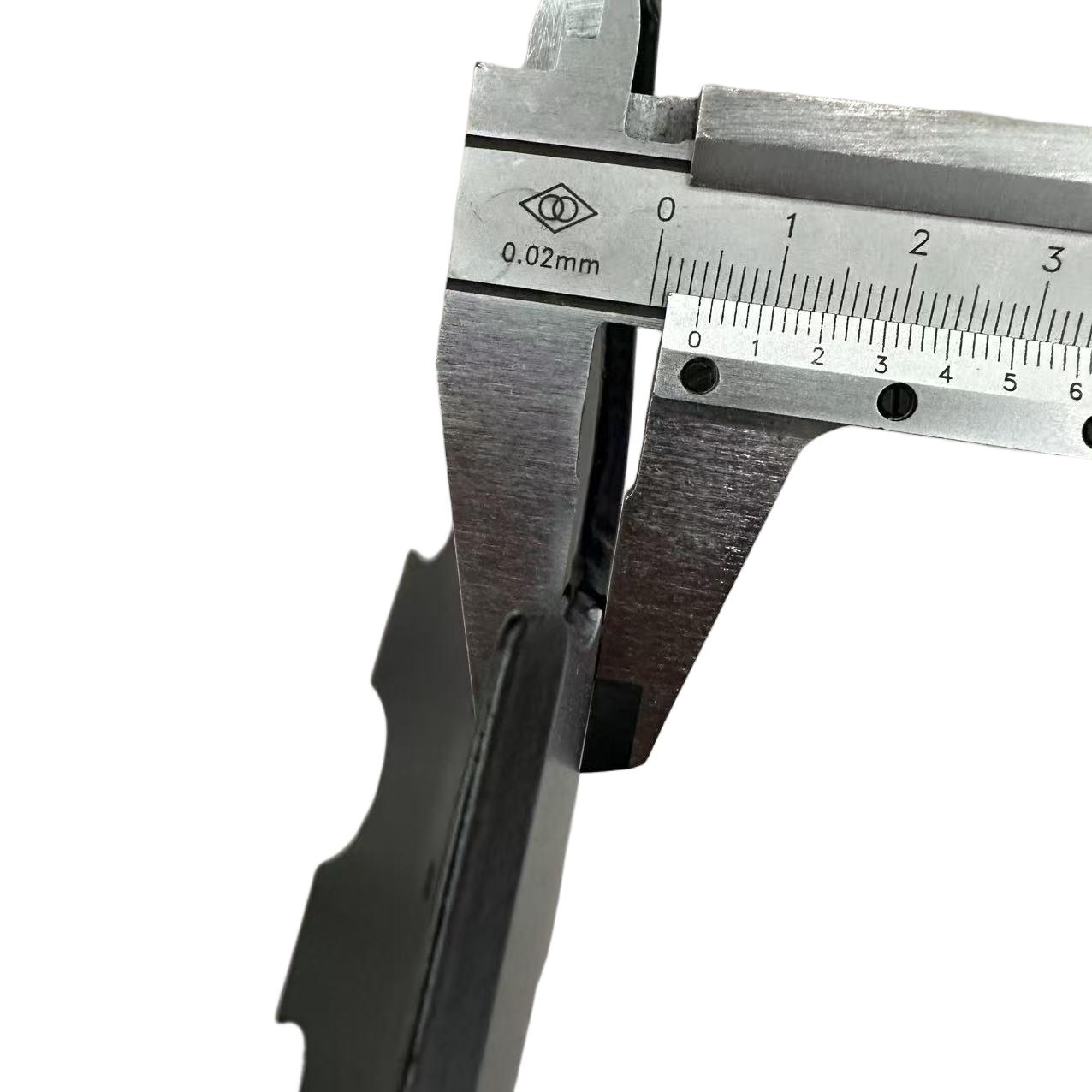
Edge treatment: The edges are subjected to secondary strengthening grinding to maintain sharpness and prevent chipping, thereby reducing tractor traction resistance and saving fuel consumption.
Curved surface structure: Utilizing a spherical design with uniform thickness or variable cross-section, the blade ensures an entry angle between 20° and 24°, allowing it to easily cut through the soil while completely burying weed residue.
Mounting holes: The center hole and slot are precision punched, ensuring high interchangeability and compatibility with rake frames from mainstream domestic and international brands (such as Recon, Gran, and Deere).
No clogging: The optimized curved surface allows sticky soil and straw to automatically detach during rotation, preventing blockages.
High soil fragmentation rate: The rotating disc compresses and shears the soil, achieving the required fine fragmentation for the seedbed in a single operation.
Post-harvest stubble removal and shallow tillage of dryland crops (wheat, corn, soybeans).
Clearing weeds and mixing organic fertilizer into wasteland.
Preparing seedbeds and leveling land before sowing.

Products Categories
-

Forged Weeding Machine Bolt-on Flail Hammer Bla...
-
Micro-tilt blades for export to the United Stat...
-

High quality Customized Casting Carbon Steel Ag...
-

Wear-resistant alloy reclamation knife Deep soi...
-
Chisel plow Shovel,Cultivator Plowshare / Pl...
-

High-quality Agricultural machinery parts: rota...