


Wear-resistant plowshare Agricultural Machinery Cultivator Parts
The plowshare (also known as the plow blade) is the core tillage component of the moldboard plow, mounted at the very front of the main plow body. It performs critical tasks such as soil penetration, cutting, and guiding. As the first component in direct contact with the soil, its performance directly impacts the operational quality, energy consumption, and service life of the entire tillage machinery.
From a functional structure perspective, the role of the plowshare is crucial.
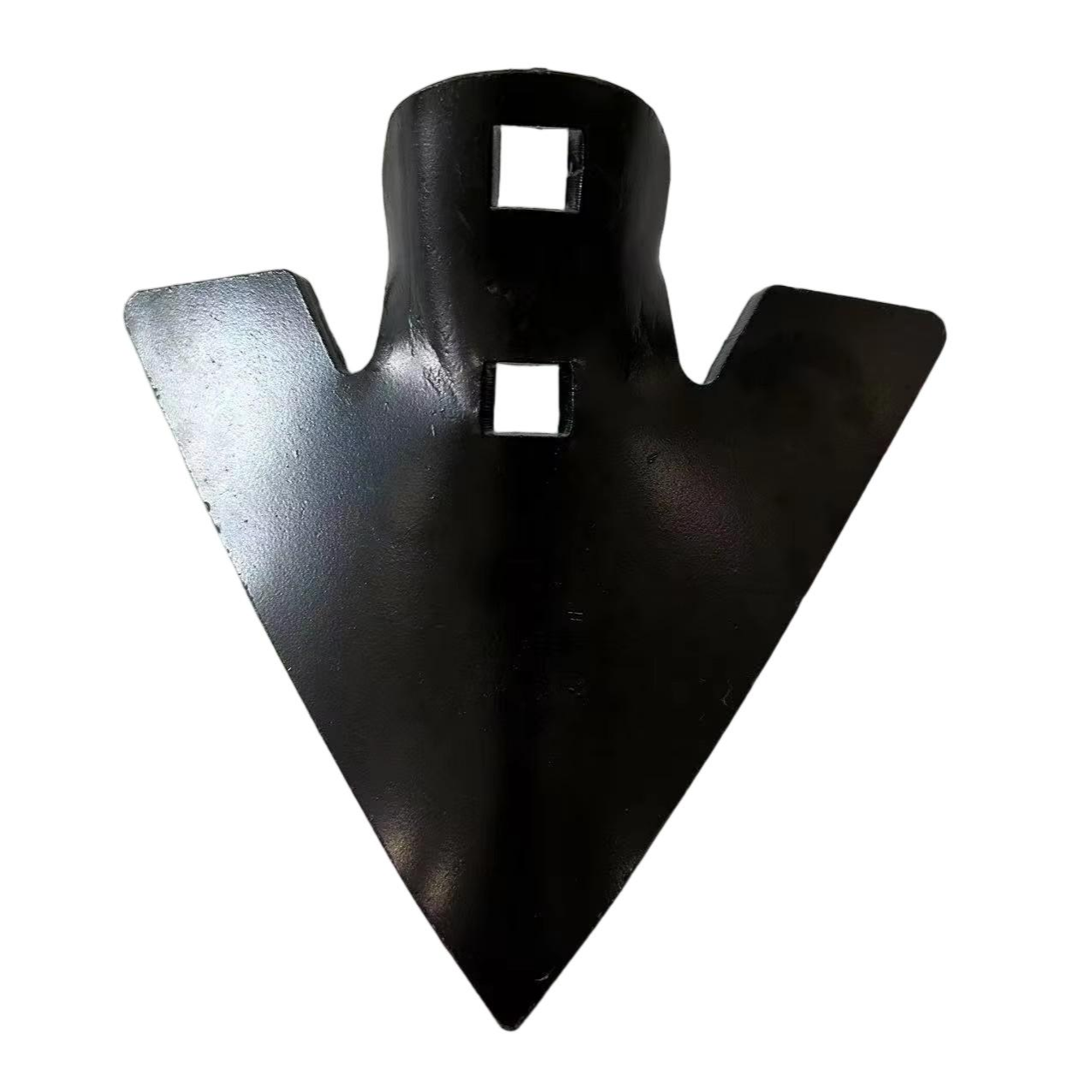
When doing homework, the plow shovel first enters the soil horizontally, cuts open the bottom layer of the soil, and guides the soil to the plow wall for crushing and flipping. In order to adapt to different soil conditions and cultivation needs, plows and shovels are divided into various structural types, mainly including trapezoidal plows used for general cultivation, chiseled plows suitable for hard soil, and triangular plows used for land reclamation
In terms of materials and craftsmanship, high-quality plows are usually made of high-performance spring steel, such as 65Mn, 60Si2Mn, and other materials. In the manufacturing process, advanced manufacturers will adopt forging technology and use large tonnage presses for one-time forging to maintain the integrity of the metal fiber structure, thereby significantly enhancing the impact resistance and wear resistance of the product.
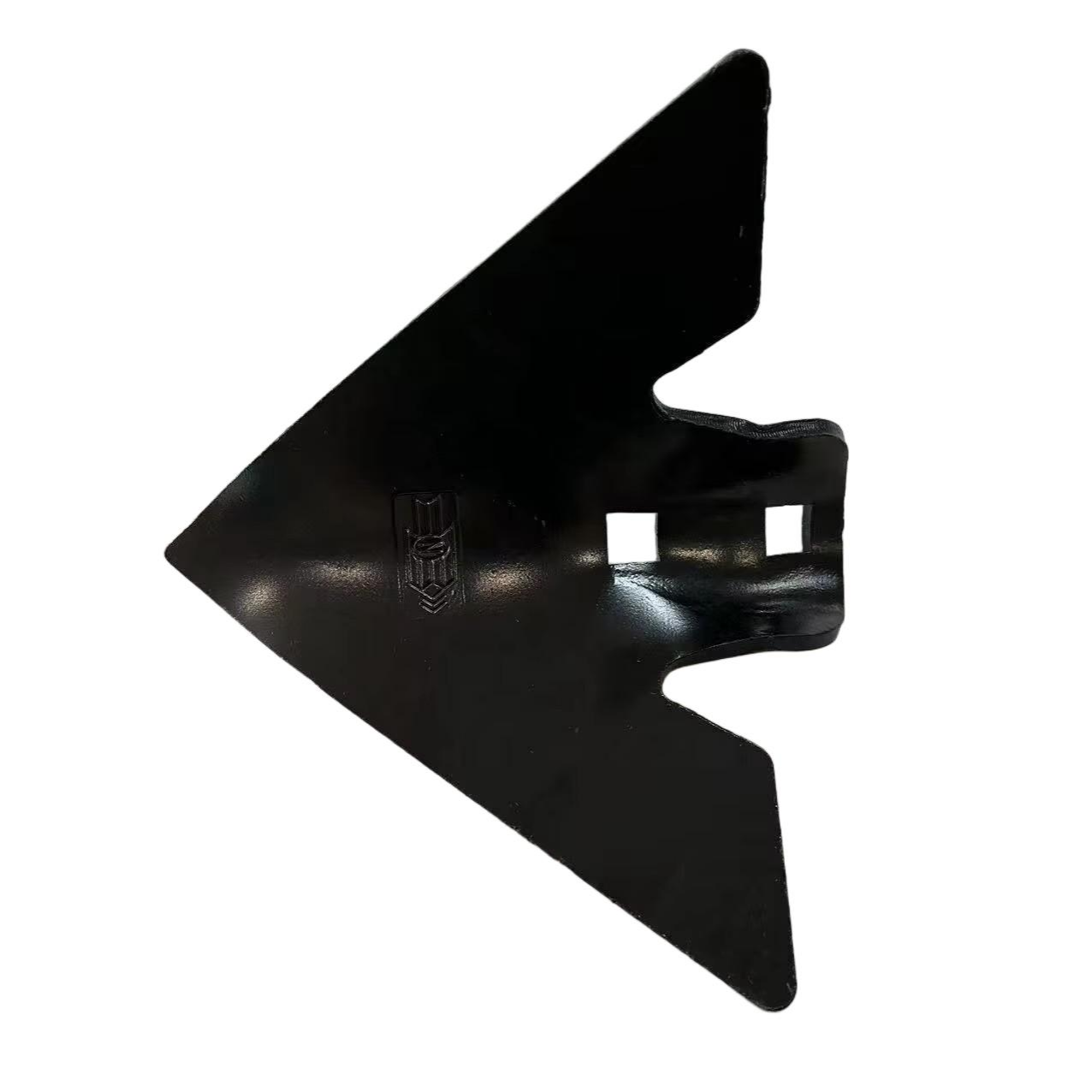
After forging, the product also needs to undergo a precise heat treatment process to achieve a reasonable hardness range of HRC 38-50. While ensuring sufficient hardness, it also has good toughness to prevent brittle fracture.
In order to extend its service life, modern plows and shovels incorporate various wear-resistant concepts in their design. For example, using local reinforcement design to accumulate more wear-resistant materials in the most severely worn areas (such as shovel tips); Some products also support flipping for use. When one side wears out, it can be flipped and installed to continue using the other shovel tip, doubling its lifespan.


