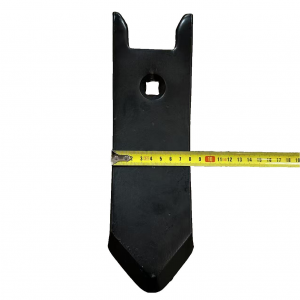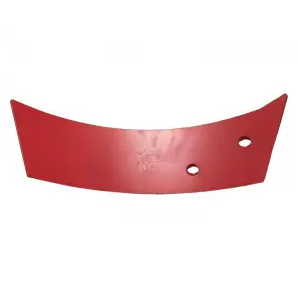


Rotary tiller tip, Subsoiler shovel, Farm plow share, Wear-resistant tillage blade, Square hole mounting blade
This is a heavy-duty agricultural tillage blade designed for high-intensity soil engagement.
Featuring a sharp, pointed design with symmetrical V-shaped reinforcing grooves on the surface,
it effectively enhances cutting efficiency and wear resistance.
Equipped with two square mounting holes (one at the top and one in the middle),
the blade ensures stable and secure fixation during operation.
Crafted from high-strength heat-treated alloy steel with a black anti-rust coating,
it boasts high hardness, superior impact resistance, and excellent corrosion resistance,
ensuring a long service life even in tough field conditions.
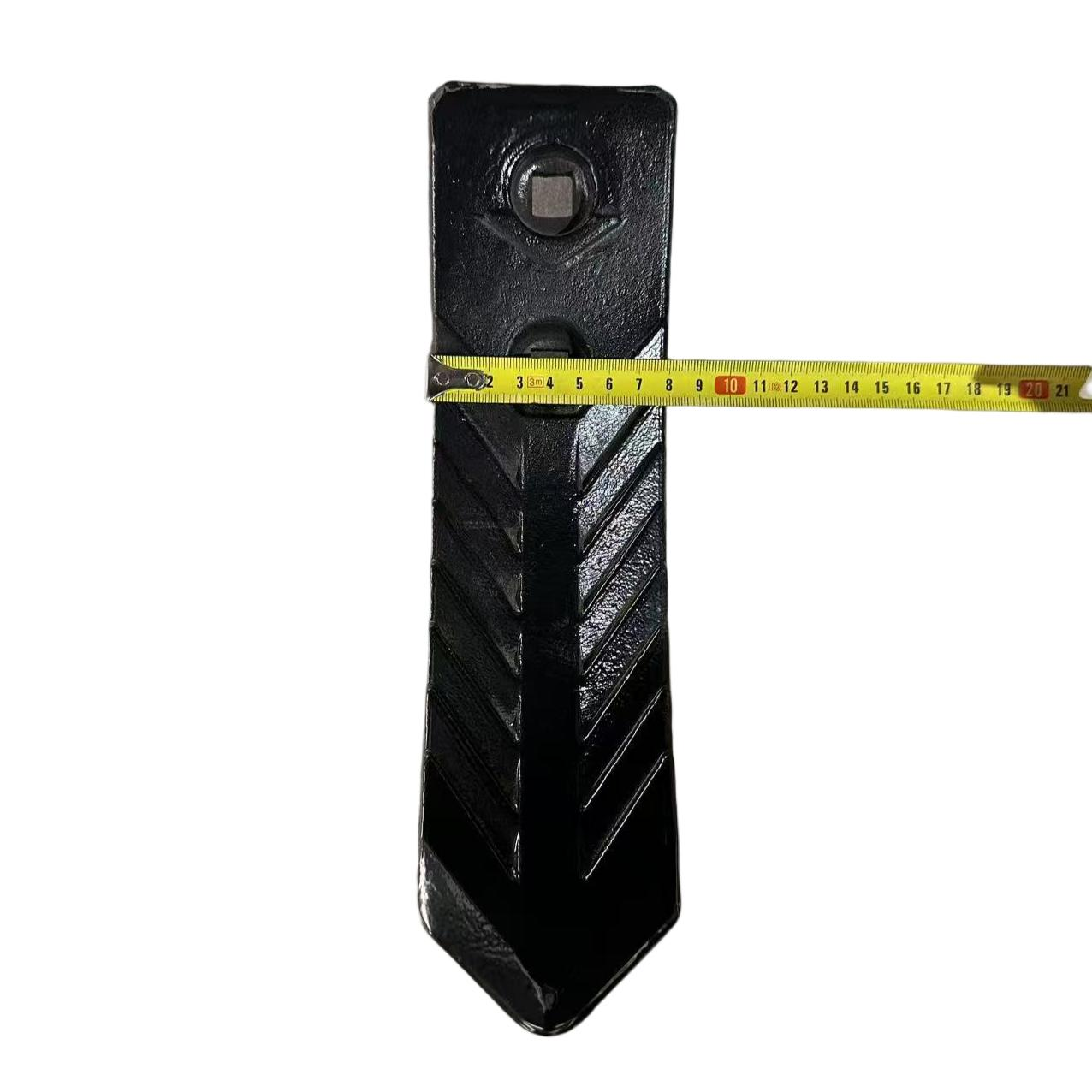
Beyond the upgrades to the core materials, the shovel tip's structural design also incorporates clever features. The V-shaped anti-slip texture on the surface ensures a firm grip on the soil during operation, preventing slippage and ensuring stable and uniform tillage depth. Pre-drilled standard bolt holes make installation and replacement efficient and convenient, allowing direct compatibility with mainstream brand tillage machinery without additional modifications, significantly reducing downtime for maintenance. Simultaneously, the black anti-rust coating further enhances corrosion resistance, ensuring the shovel tip maintains stable performance even during long-term outdoor operations.
For large-scale agricultural production, choosing a carbide shovel tip means lower overall costs: reduced frequency of parts replacement, lower labor and downtime losses, while ensuring cultivation quality and laying a good foundation for subsequent crop growth. Whether breaking up soil compaction, deep tillage, or weeding, this shovel tip delivers stable and reliable performance, helping to improve the quality and efficiency of agricultural production.

As agricultural mechanization moves towards high efficiency and energy conservation, carbide shovel tips are not only an upgrade of accessories, but also a key step in promoting the optimization of agricultural production models, making every tillage operation more efficient and sustainable.