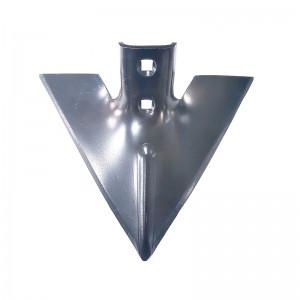


High-quality disc harrow blades, manganese steel forged
The plowing blade, also known as the deep plowing blade or land reclamation blade, is an indispensable core wear component in agricultural machinery, primarily used with equipment such as rotary tillers, micro-tillers, and multi-functional management machines. This product is specifically designed for harsh soil conditions, aiming to efficiently break up hard soil layers, remove weed roots, and clear rocky plots. It serves as an ideal cutting tool for land reclamation, orchard soil loosening, terraced field development, and facility agriculture construction.
This cultivation knife is forged from high-quality alloy structural steel (such as 65Mn or 60Si2Mn). The blade undergoes strict vacuum heat treatment to achieve both high hardness and toughness. The blade is specially treated with isothermal quenching technology, which significantly improves wear resistance. Even after long-term operation in red soil or black clay mixed with sand and gravel, it can effectively resist wear and deformation, and its service life far exceeds that of ordinary cutting tools.
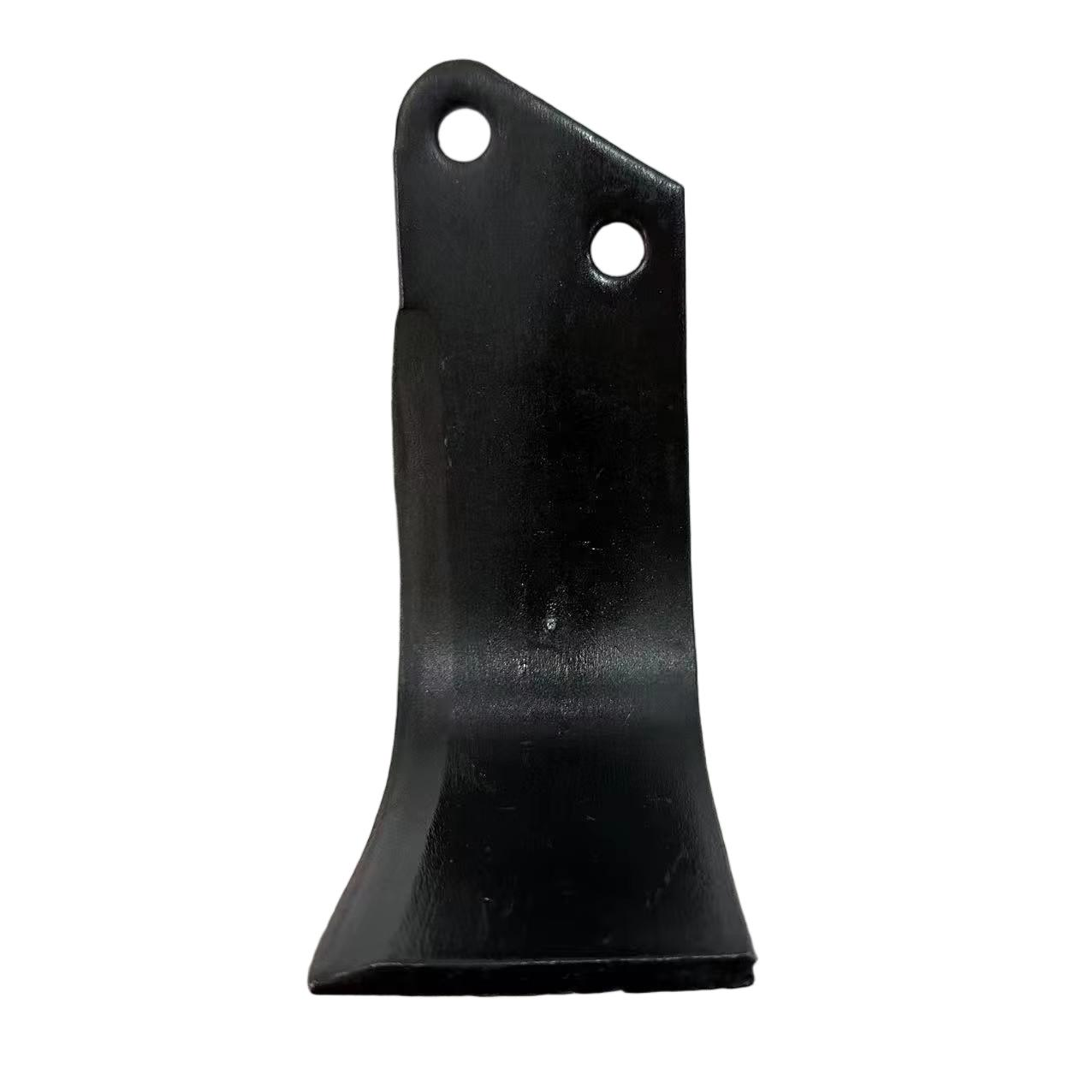
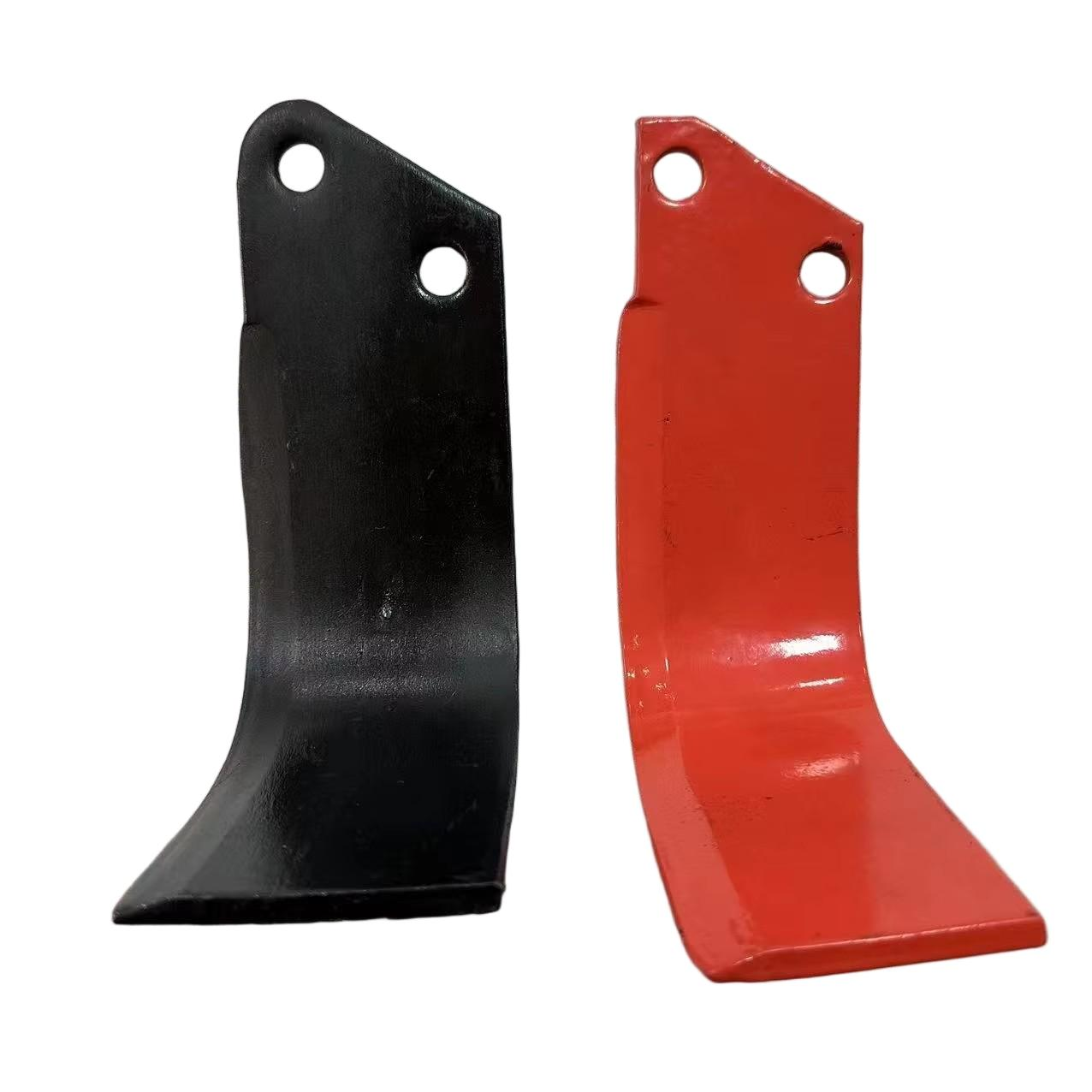
The blade design fully combines the principles of aerodynamics and soil mechanics, using specific bending radii and blade angles. This design not only reduces the resistance when entering the soil, but also generates strong cutting and throwing forces during high-speed rotation, achieving the effect of "uniform soil fragmentation and soil cover flipping". Whether it is a compacted wasteland or a hard grass layer, it can be easily cut in, cutting off the roots of weeds and preventing them from getting tangled and blocking the blade.
This cultivation knife has a high degree of standardization, precise installation holes, and is suitable for mainstream brands of small and medium-sized micro cultivators and large rotary tillers in the market. The optimized design of the knife magazine ensures dynamic balance during multi blade operations, reduces mechanical vibration, improves operational smoothness, and achieves seeding level land preparation requirements in a single operation, effectively reducing agricultural machinery fuel consumption.